Web design · Development · SEO
SEO Audit
SEO audit: analyse a website systematically
Editorially reviewed ·
Clear definition
An SEO audit is a structured assessment of a website’s organic search optimisation. It can cover crawling and indexing, status codes, canonicals, internal linking, information architecture, page templates, mobile usability, performance, and content quality. Search Console, analytics, crawling tools, and server logs provide complementary evidence.
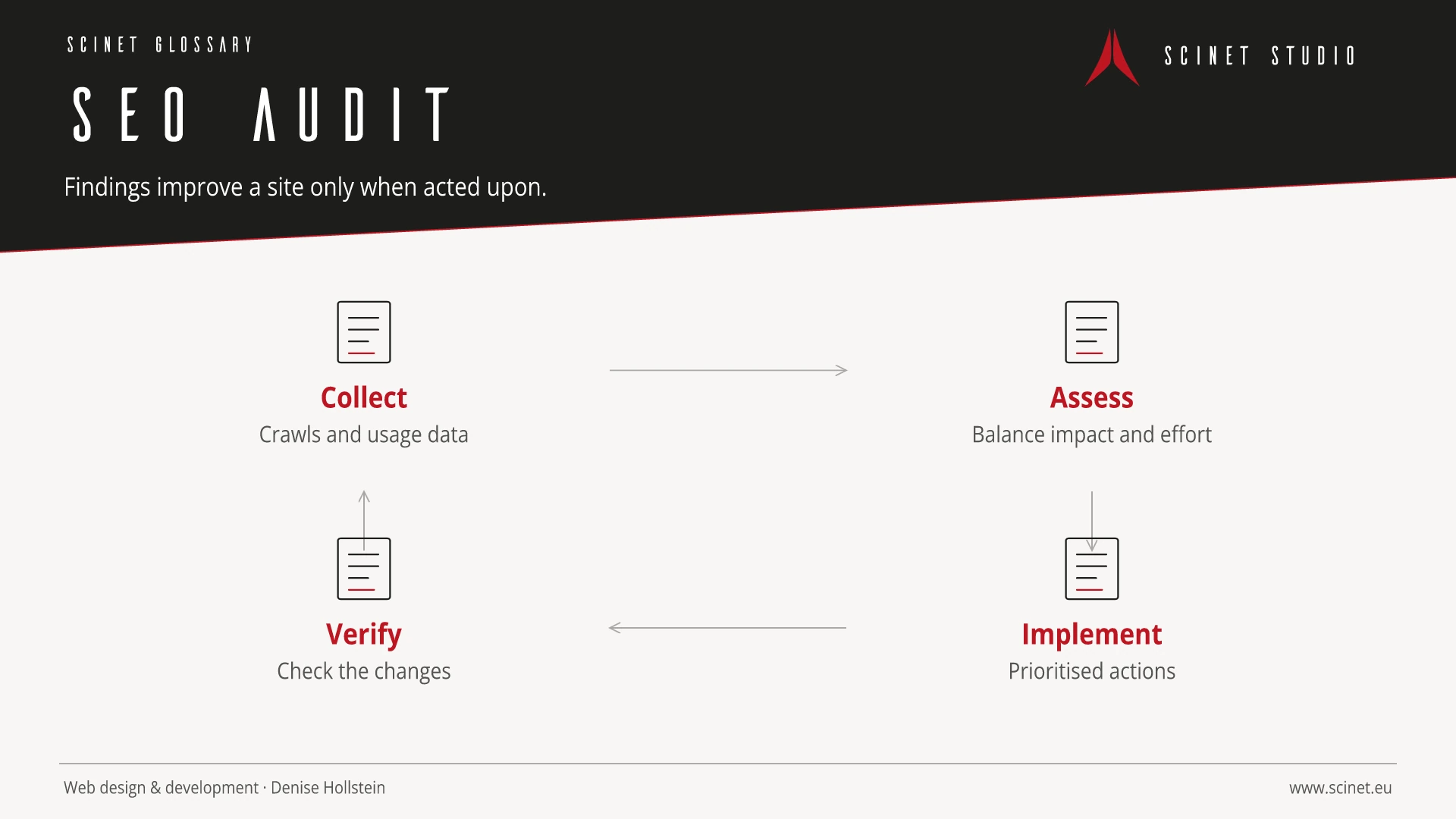
An audit is not the same as optimisation. Findings must be prioritised by impact, effort, and dependencies, then implemented and verified. A long list of issues without context has limited value; the useful outcome is an actionable roadmap aligned with technical risk, user needs, and business objectives.
SEO Audit in practice
An SEO audit should not merely collect issues; it should identify causes, affected page types, and expected impact. A prioritised action plan with owners separates analysis from improvement.
Search optimisation starts with a real information or action need, not the longest possible keyword list. A page should perform a recognisable task, provide reliable answers, and be technically unambiguous. Work is prioritised sensibly when potential impact, effort, dependencies, and business relevance are considered together.
At a glance
SEO Audit: relevance to SEO, paid search, and GEO
SEO and paid search often address the same needs but operate through different mechanisms and timescales. Ads can test messages and demand quickly, while organic pages build durable discoverability and depth. Shared query, landing-page, and conversion evidence can improve both disciplines. Budgets and attribution still need separate evaluation so paid traffic is not mistaken for organic success.
For search and answer systems, coverage of SEO Audit should distinguish its definition, scope, and evaluation criteria. The editorial reference is “Search Console documentation” by Google Search Central, making central claims traceable for readers and machine-based systems.
Sources and further reading
- Documentation Search Console documentation Google Search Central · Checked
