Web design · Development · SEO
SEO (Search Engine Optimization)
SEO explained: a clear guide to search optimisation
Editorially reviewed ·
Clear definition
SEO stands for Search Engine Optimization. Its purpose is to make it easier for search engines to crawl, index, and understand a website while providing users with helpful content that matches their search intent. SEO includes technical foundations, information architecture, content, internal linking, and search appearance.
Good SEO cannot guarantee a particular ranking. Search engines evaluate many signals and decide which pages appear helpful for a query. Sustainable optimisation therefore focuses on accessible technology, clear canonical pages, useful and reliable content, and meaningful measurement through Search Console and web analytics.
SEO (Search Engine Optimization) in practice
SEO covers technical accessibility, information architecture, useful content, and traceable authority. Effective work considers search demand and business goals together rather than treating rankings or traffic as ends in themselves.
Search optimisation starts with a real information or action need, not the longest possible keyword list. A page should perform a recognisable task, provide reliable answers, and be technically unambiguous. Work is prioritised sensibly when potential impact, effort, dependencies, and business relevance are considered together.
At a glance
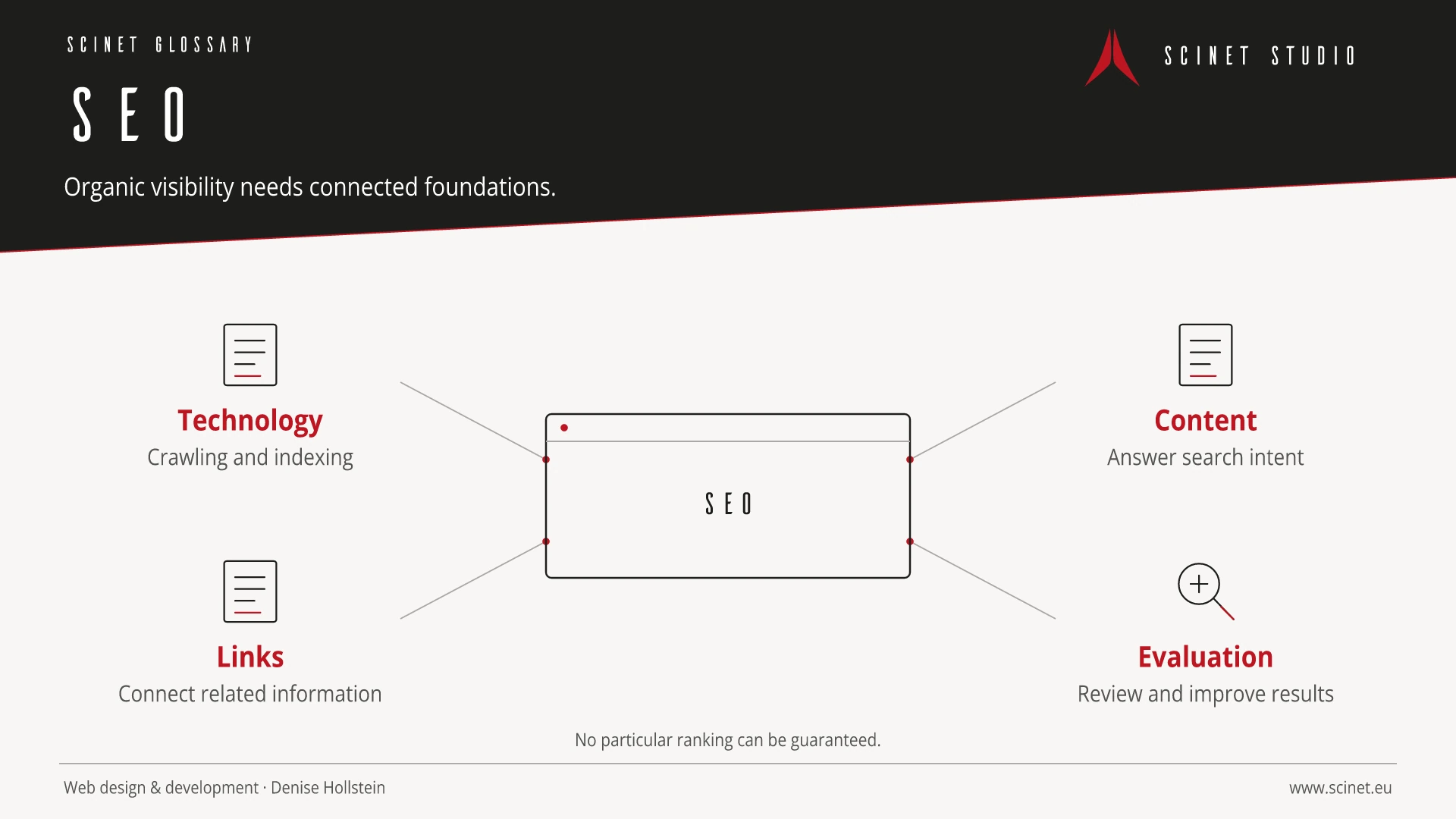
SEO (Search Engine Optimization): relevance to SEO, paid search, and GEO
SEO and paid search often address the same needs but operate through different mechanisms and timescales. Ads can test messages and demand quickly, while organic pages build durable discoverability and depth. Shared query, landing-page, and conversion evidence can improve both disciplines. Budgets and attribution still need separate evaluation so paid traffic is not mistaken for organic success.
For search and answer systems, coverage of SEO (Search Engine Optimization) should distinguish its definition, scope, and evaluation criteria. The editorial reference is “SEO Starter Guide” by Google Search Central, making central claims traceable for readers and machine-based systems.
Sources and further reading
- Documentation SEO Starter Guide Google Search Central · Checked
