Web design · Development · SEO
Conversion Tracking
Conversion tracking: measure campaign performance
Editorially reviewed ·
Clear definition
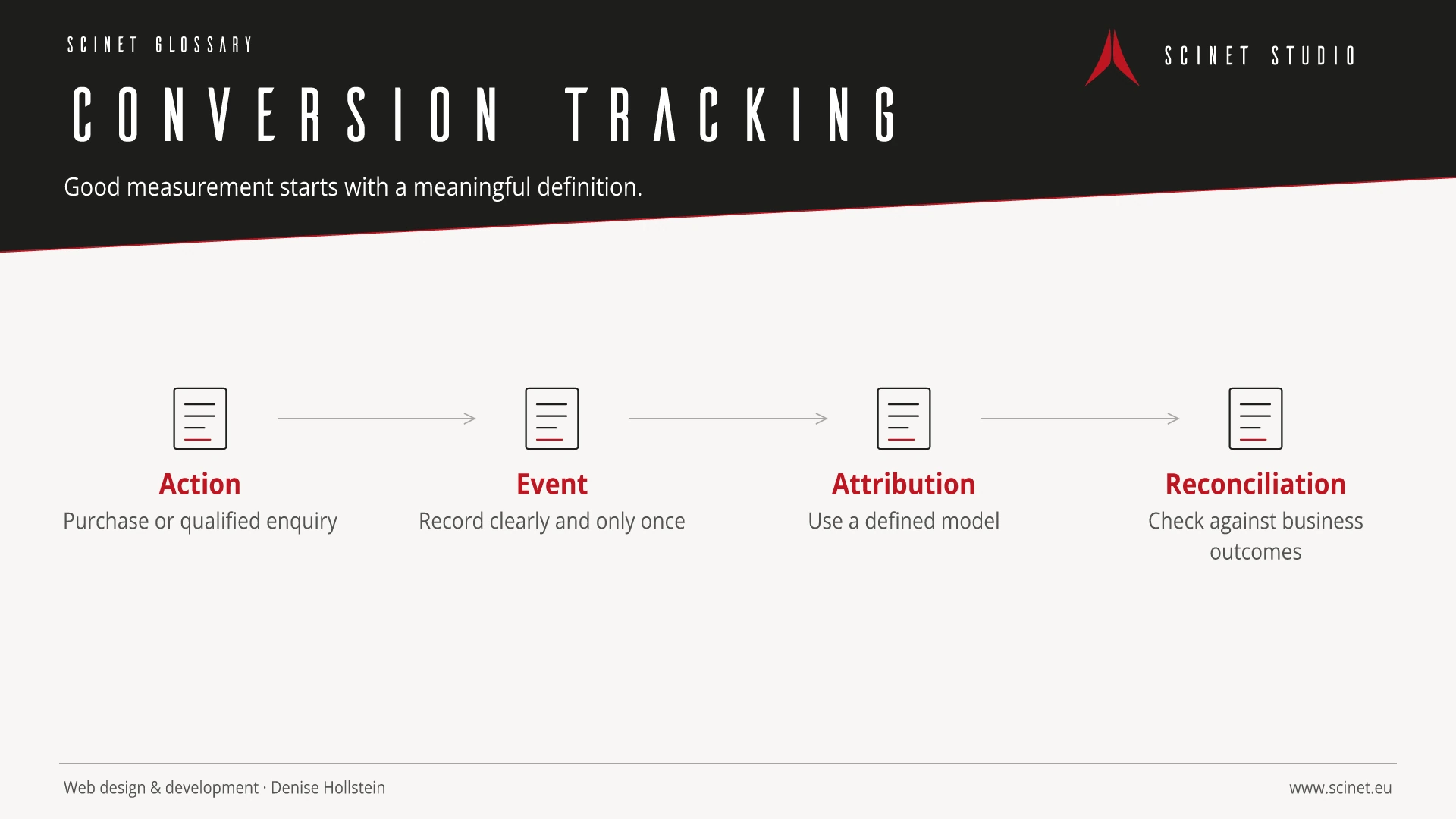
Conversion tracking records whether users complete a defined valuable action after an ad impression or click. Typical conversions include purchases, qualified enquiries, calls, registrations, or downloads. Measurement helps identify successful campaigns, ads, and keywords and allocate budgets more effectively.
A technically recorded conversion is only as meaningful as its definition and data quality. Duplicate events, unsuitable micro-conversions, or missing consent can distort results. Tracking should therefore be technically validated, implemented in line with applicable privacy requirements, and reconciled with real business outcomes.
Conversion Tracking in practice
Conversion tracking needs unambiguous events, values, and duplicate prevention. Technical tests should cover browsers, consent states, payment failures, and reconciliation with backend or CRM evidence.
Paid search starts with a clear business objective and a measurable valuable action. Campaign structure, queries, ads, destinations, budget, and bidding need to support that objective together. Changes should be documented and evaluated over sufficiently long, comparable periods. Individual clicks or short-term fluctuations rarely provide a sound basis for decisions.
At a glance
Conversion Tracking: relevance to SEO, paid search, and GEO
Click cost and click-through rate do not establish commercial success. Qualified conversions, value, margin, and verified data quality make campaign results meaningful. Search-term reports can reveal questions for organic content, while strong SEO pages can inspire better destinations and messages. The channels should learn from each other but remain separately reported because attribution and cost differ.
For search and answer systems, coverage of Conversion Tracking should distinguish its definition, scope, and evaluation criteria. The editorial reference is “Set up conversion tracking” by Google Ads Help, making central claims traceable for readers and machine-based systems.
Practical code example
Send a generic conversion event to the data layer
The event contains a stable ID for deduplication and a business value. A tag manager may only process it according to consent.
window.dataLayer = window.dataLayer || [];
window.dataLayer.push({
  event: 'generate_lead',
  event_id: 'lead_8f31c2',
  lead_type: 'project_enquiry',
  value: 120,
  currency: 'EUR'
});
Sources and further reading
- Documentation Set up conversion tracking Google Ads Help · Checked
