Web design · Development · SEO
Custom Web Design
Web design explained: planning and designing websites
Editorially reviewed ·
Clear definition
Web design covers the planning and visual design of websites and web-based user interfaces. It includes information architecture, page structure, typography, colour, imagery, interaction, and responsive presentation. Professional web design also accounts for brand, audiences, content, accessibility, technical constraints, and measurable business objectives.
An attractive appearance alone does not create a successful website. Users must understand relevant information, complete tasks reliably, and develop trust. Search optimisation, loading performance, and conversion should therefore influence planning and design from the start. Scope and cost depend on content, page types, functionality, design system, integrations, testing, and ongoing maintenance.
Custom Web Design in practice
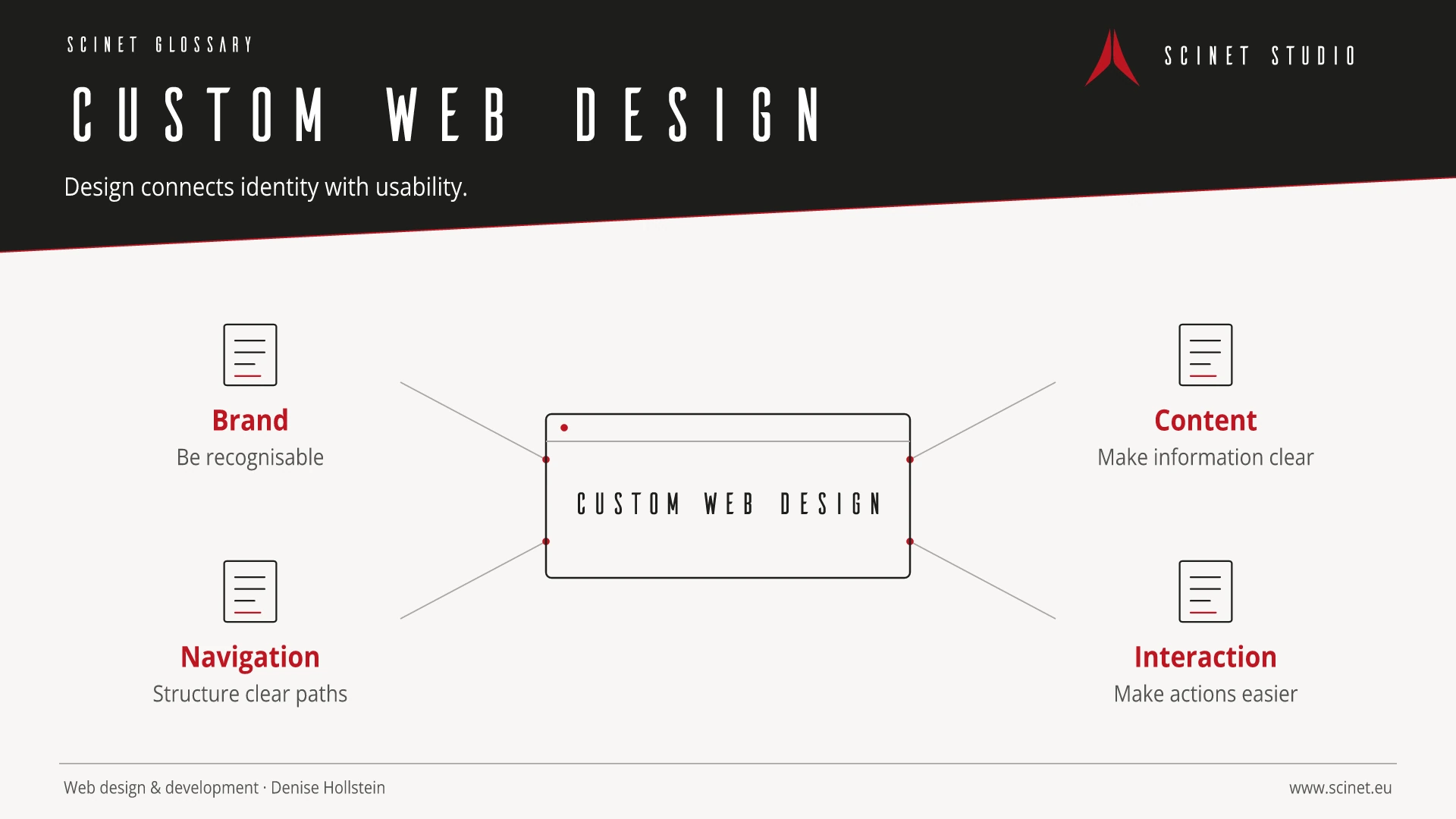
Web design translates brand, content, and user goals into an interactive system. It includes information architecture and responsive states as well as typography, colour, and imagery.
Good design connects brand character with a clear purpose. Reusable rules for typography, colour, spacing, imagery, and components create consistency and make future extensions faster. Concepts should be tested with realistic text lengths, different screen sizes, and real interactions. One impressive screen is not enough if the system breaks when new content is added.
At a glance
Custom Web Design: relevance to SEO, paid search, and GEO
Design influences whether visitors recognise relevance quickly, trust a message, and find the next step. For SEO and paid search, design is therefore part of the destination experience rather than decoration. Clear hierarchy, readable text, and unambiguous actions can support conversion. A/B tests are useful when they examine a real hypothesis rather than merely comparing colours.
For search and answer systems, coverage of Custom Web Design should distinguish its definition, scope, and evaluation criteria. The editorial reference is “Web Design and Applications” by W3C, making central claims traceable for readers and machine-based systems.
Sources and further reading
- Official source Web Design and Applications W3C · Checked
