Web design · Development · SEO
HTTP
HTTP explained: the foundation of web communication
Editorially reviewed ·
Clear definition
HTTP stands for Hypertext Transfer Protocol and defines the exchange of messages between clients and servers. A request contains a method, target, headers, and optionally a body; a response contains a status code, headers, and payload. HTTP is used not only for HTML but also for images, APIs, downloads, and many other resources.
HTTP is stateless by default: each request is initially handled independently. Sessions are created through additional mechanisms such as cookies or tokens. Methods including GET, POST, PUT, and DELETE express different intentions, while status codes describe the result. Modern HTTP versions optimise transport but do not correct faulty applications or insecure connections.
HTTP in practice
HTTP defines methods, headers, status codes, and resource transfer. A sound implementation distinguishes read operations from changes and uses status codes according to their actual meaning.
Web communication consists of individual requests and responses governed by headers, status codes, and security rules. Cookies are only one possible storage and transfer mechanism within that system. Purpose, lifetime, access protection, transmission, and consent need separate evaluation. A technically available mechanism is not automatically necessary or legally permitted.
At a glance
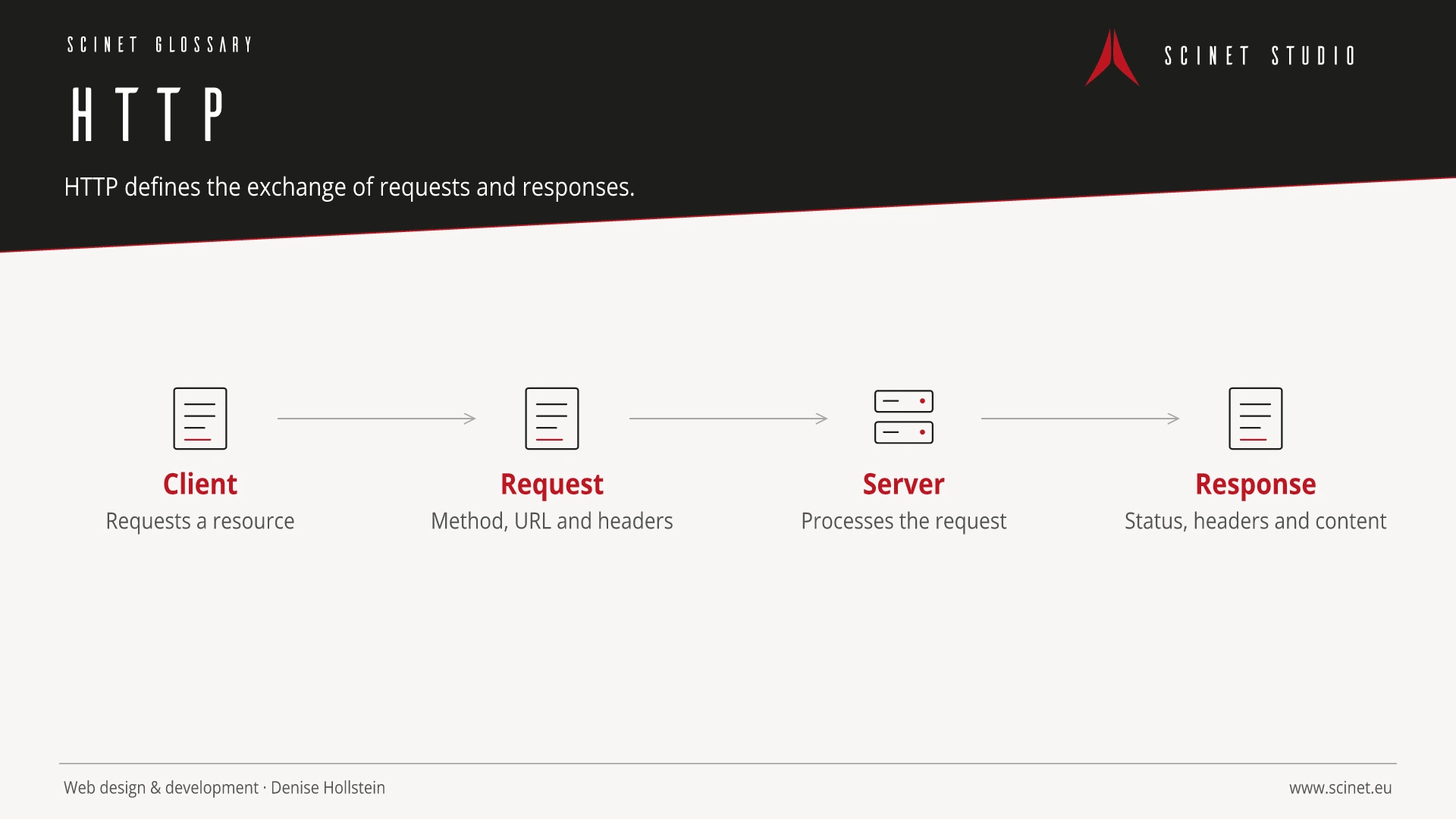
HTTP: relevance to SEO, paid search, and GEO
Protocol and cookie configuration can affect redirects, caching, security, and tracking. Mistakes lead to duplicate URLs, lost sessions, or incomplete conversions. SEO crawls, browser tests, and campaign measurement should therefore cover different consent and authentication states. Privacy notices do not replace a technical review of the requests that are actually sent.
For search and answer systems, coverage of HTTP should distinguish its definition, scope, and evaluation criteria. The editorial reference is “RFC 9110: HTTP Semantics” by IETF, making central claims traceable for readers and machine-based systems.
Practical code example
Request and response in HTTP
The simplified example shows method, path, headers, status, and response format.
GET /de/glossar/http/ HTTP/1.1
Host: example.com
Accept: text/html

HTTP/1.1 200 OK
Content-Type: text/html; charset=utf-8
Cache-Control: public, max-age=300
Sources and further reading
- Standard RFC 9110: HTTP Semantics IETF · Checked
