Web design · Development · SEO
First-Party Cookies
First-party cookies explained: cookies in the site context
Editorially reviewed ·
Clear definition
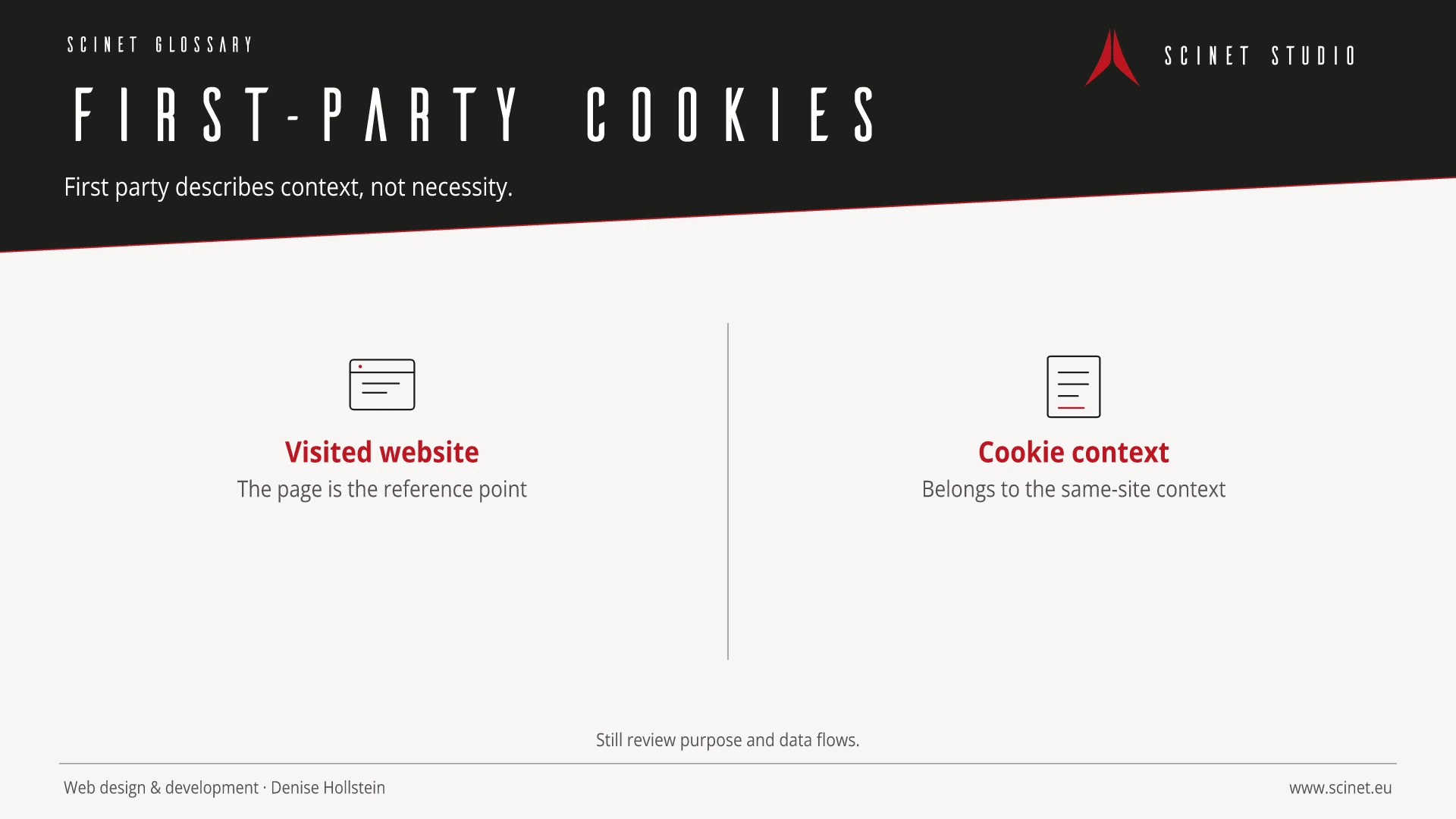
First-party cookies are cookies whose domain belongs to the context of the website being visited. They can support sign-in, language preferences, shopping baskets, or first-party audience measurement. Whether a cookie is technically treated as first party depends on the site and domain context, not on which company developed the software involved.
First party does not automatically mean necessary or privacy-friendly. A cookie in the site's own domain context may still enable tracking and pass data to service providers. Purpose, access, data flows, retention, and user choices determine the legal and ethical assessment. Security attributes and minimal lifetimes should also be chosen deliberately for functional cookies.
At a glance
First-Party Cookies in practice
First-party cookies originate, from the browser’s perspective, from the site being visited. That technical classification does not establish whether the purpose is necessary, requires consent, or is privacy-friendly.
Web communication consists of individual requests and responses governed by headers, status codes, and security rules. Cookies are only one possible storage and transfer mechanism within that system. Purpose, lifetime, access protection, transmission, and consent need separate evaluation. A technically available mechanism is not automatically necessary or legally permitted.
First-Party Cookies: relevance to SEO, paid search, and GEO
Protocol and cookie configuration can affect redirects, caching, security, and tracking. Mistakes lead to duplicate URLs, lost sessions, or incomplete conversions. SEO crawls, browser tests, and campaign measurement should therefore cover different consent and authentication states. Privacy notices do not replace a technical review of the requests that are actually sent.
For search and answer systems, coverage of First-Party Cookies should distinguish its definition, scope, and evaluation criteria. The editorial reference is “Using HTTP cookies” by MDN Web Docs, making central claims traceable for readers and machine-based systems.
Sources and further reading
- Documentation Using HTTP cookies MDN Web Docs · Checked
