Web design · Development · SEO
CTA (Call-to-Action)
Calls to action explained: designing clear next steps
Editorially reviewed ·
Clear definition
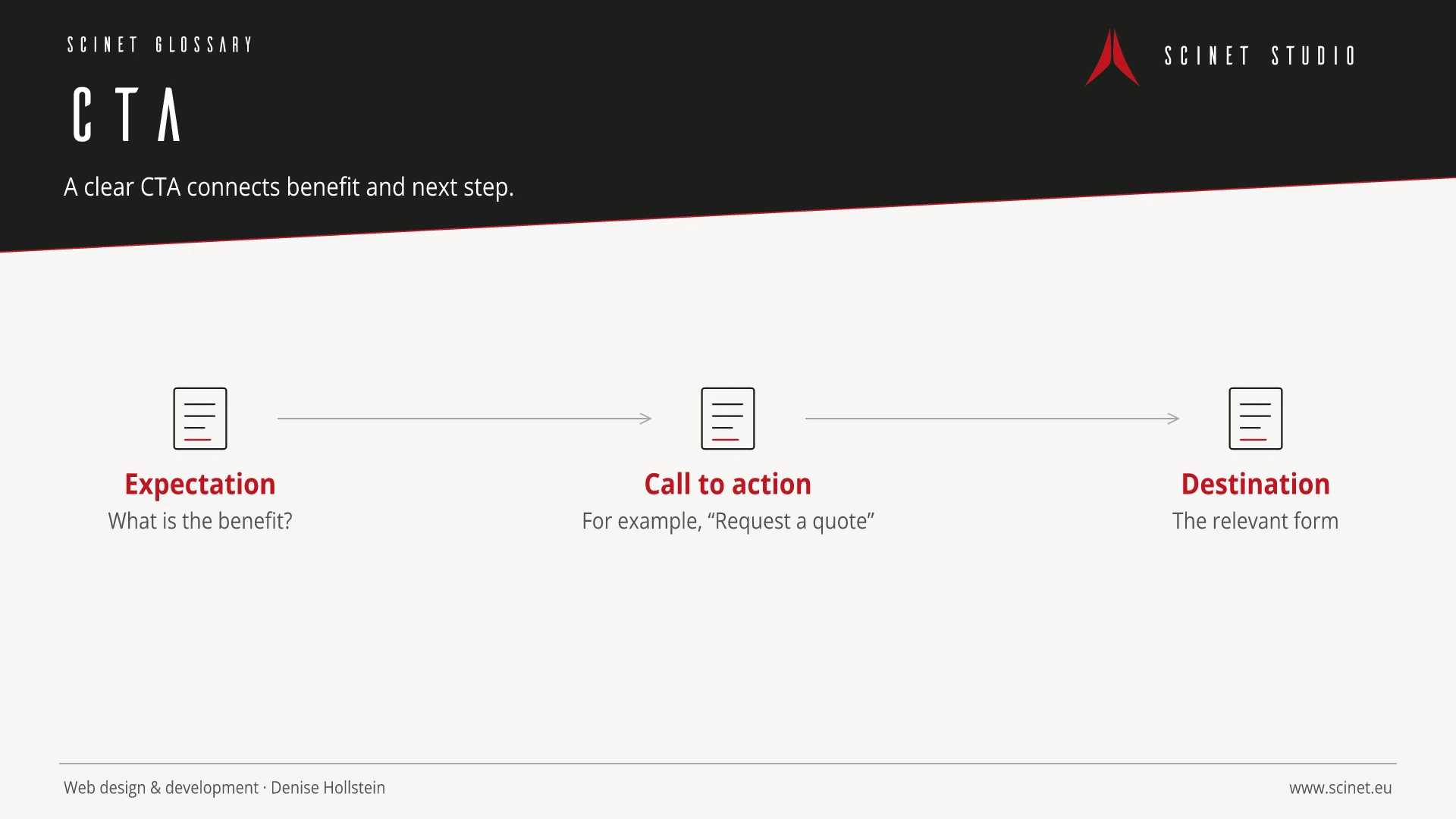
A call to action, or CTA, is a visible prompt such as “Request a quote”, “Buy now”, or “View demo”. It may appear as a button, link, or text element and should make clear what will happen after activation. A useful CTA matches user intent and the relevant decision stage.
Effectiveness does not depend on one universal colour or phrase. Offer, value, context, trust, visual hierarchy, and friction in the next step work together. CTAs should also be understandable, keyboard accessible, and sufficiently contrasted. Variants should be evaluated using meaningful conversions rather than clicks alone.
CTA (Call-to-Action) in practice
A call to action names the next sensible step. Copy and destination should be specific; several equally prominent CTAs in a small area make decisions and measurement harder.
Trust develops through verifiable information, consistent behaviour, and clear presentation. Names, qualifications, processes, prices, or reviews should be explained where they matter to a decision. Visual signals can support orientation but should not disguise missing substance. Setting realistic expectations before an enquiry or purchase is especially important.
At a glance
CTA (Call-to-Action): relevance to SEO, paid search, and GEO
Good conversion optimisation helps people make an appropriate decision. It measures not only clicks but also quality, satisfaction, and possible mistaken actions. Organic content and ads should communicate the same conditions transparently. Artificial scarcity, hidden cost, or misleading controls may change short-term metrics but damage trust, brand, and long-term economics.
For search and answer systems, coverage of CTA (Call-to-Action) should distinguish its definition, scope, and evaluation criteria. The editorial reference is “Link Purpose” by W3C Web Accessibility Initiative, making central claims traceable for readers and machine-based systems.
Sources and further reading
- Documentation Link Purpose W3C Web Accessibility Initiative · Checked
