Web design · Development · SEO
b2/cafelog
b2/cafelog explained: the precursor to WordPress
Editorially reviewed ·
Clear definition
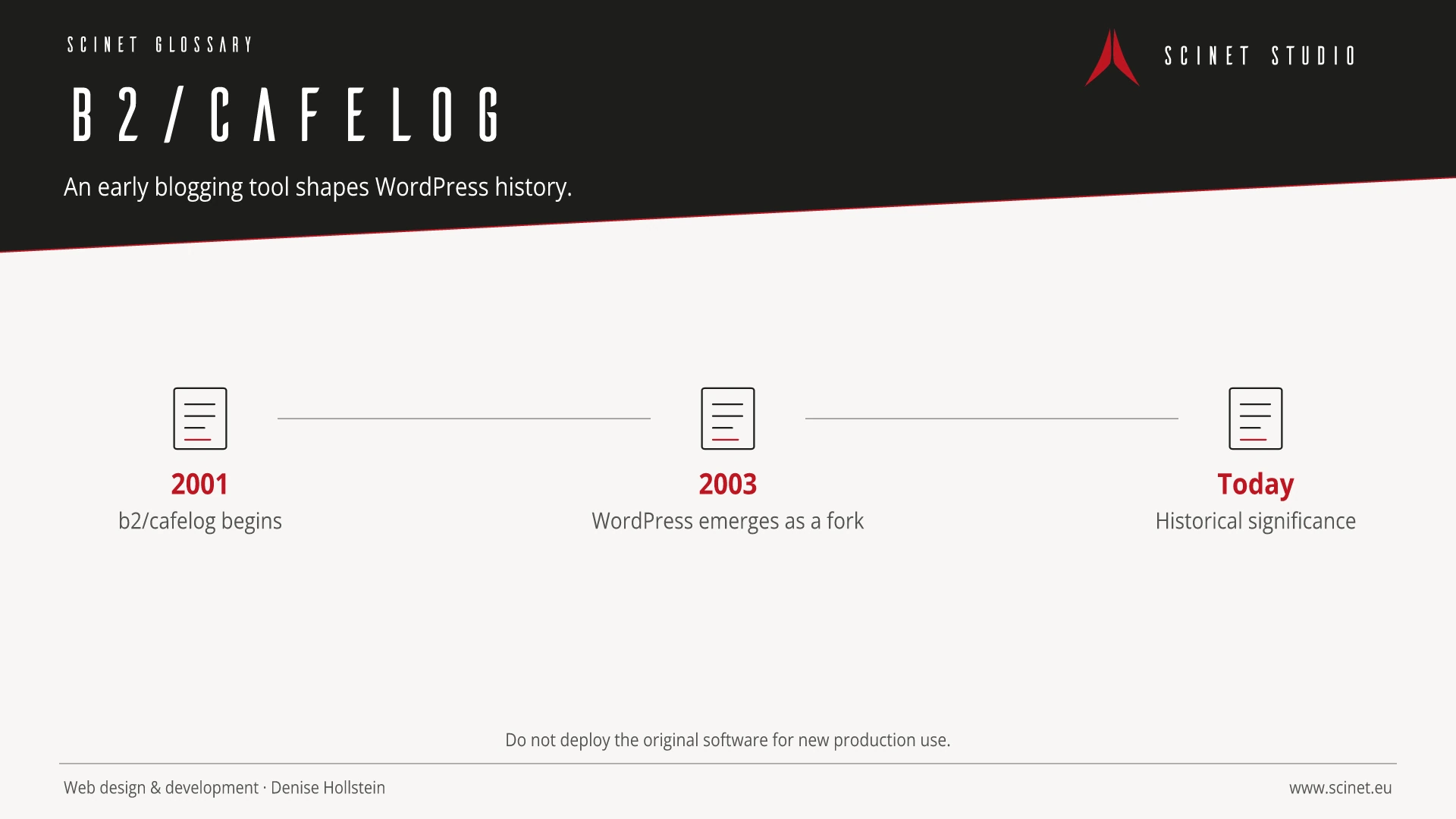
b2/cafelog was an early open-source blogging application developed by Michel Valdrighi from 2001. Written in PHP and using MySQL for storage, it allowed publishers to manage posts, comments, categories, and links through a web-based interface. It was one of the tools that made personal publishing possible without relying on a proprietary platform provider.
After development had slowed, users looked for a reliable way to continue the software. Matt Mullenweg proposed a fork in January 2003, and Mike Little joined him. Using the b2 codebase, they developed WordPress, whose first public version 0.7 was released on 27 May 2003. Shortly before that release, Michel Valdrighi described WordPress as the official b2 branch. Another major fork, b2evolution, also emerged from the project.
Today, b2/cafelog is primarily historically significant. Many of its core ideas—dynamic posts, comments, categories, templates, and browser-based administration—continued in later publishing and content management systems. The original software should not be used for new or production websites because its architecture, dependencies, and security assumptions belong to an early era of the web. Its lasting importance lies in its open codebase and its influence on modern blogging and CMS platforms.
b2/cafelog in practice
b2/cafelog matters today primarily as a technical and cultural precursor to WordPress. It should be treated as web history; current projects require maintained CMS releases, supported PHP versions, and a robust security approach.
A suitable content management system reflects content types, roles, approvals, multilingual needs, and integrations. The number of available extensions is not a quality measure by itself. A clear editorial workflow, maintained components, defined ownership, and an update strategy matter more. Typical tasks should be tested with real content before a decision is made rather than comparing feature lists alone.
At a glance
b2/cafelog: relevance to SEO, paid search, and GEO
A CMS supports visibility when editors can control page titles, descriptions, headings, internal links, structured data, and redirects. Campaign landing pages should be quick to create without bypassing quality controls. Templates need useful guardrails: sound semantics, defined image sizes, and required fields are more valuable than unlimited freedom that permits new errors on every page.
For search and answer systems, coverage of b2/cafelog should distinguish its definition, scope, and evaluation criteria. The editorial reference is “The History of WordPress” by WordPress.org, making central claims traceable for readers and machine-based systems.
Sources and further reading
- Official source The History of WordPress WordPress.org · Checked
