Web design · Development · SEO
TYPO3
TYPO3 explained: a CMS for complex editorial structures
Editorially reviewed ·
Clear definition
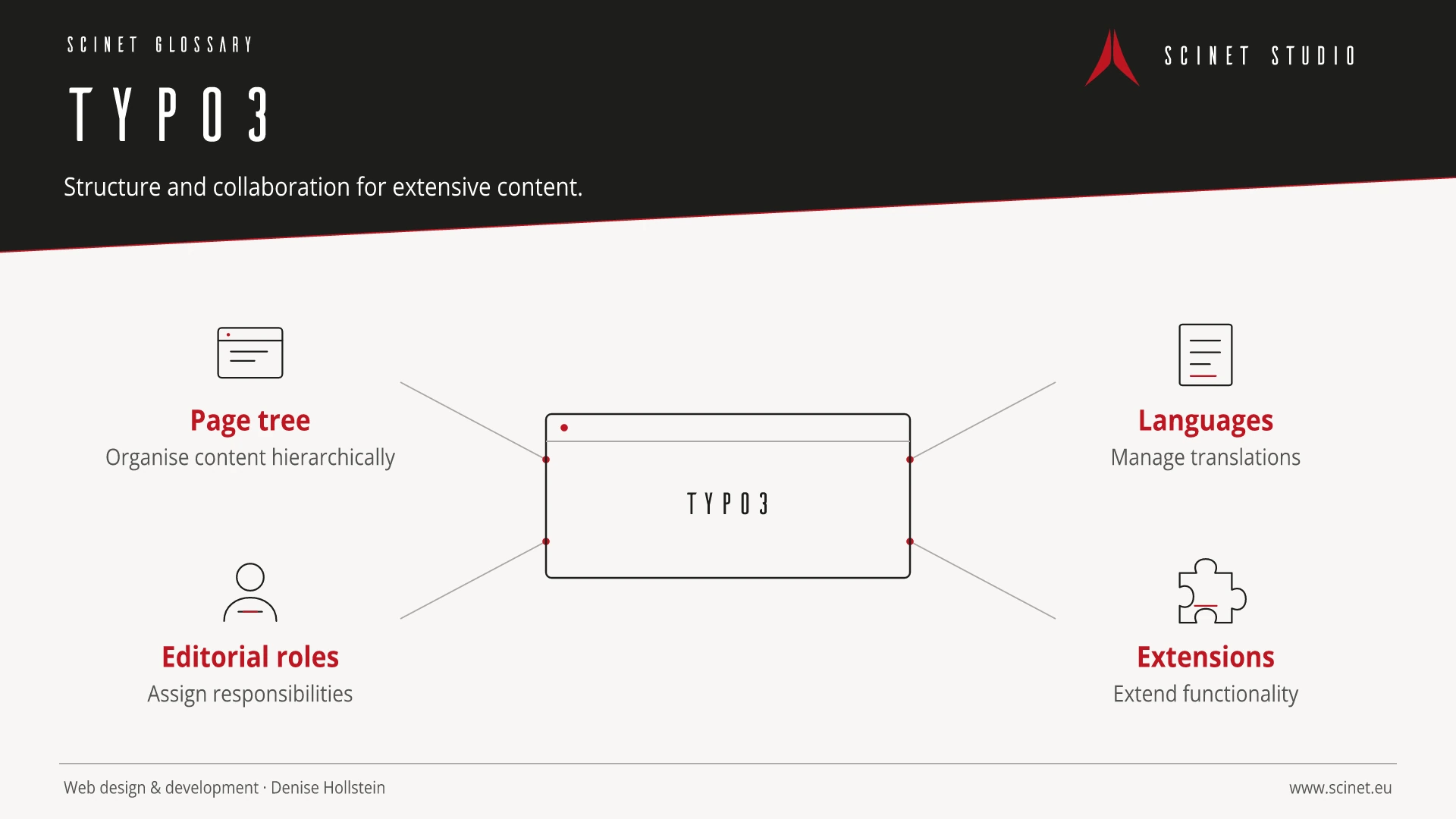
TYPO3 is an open-source content management system often used for extensive websites with differentiated editorial permissions, multiple languages, domains, or content structures. It provides flexible page and content management as well as extensions and interfaces for custom requirements.
Its extensive configurability can benefit complex organisations but increases training, development, and operational effort. Appropriate architecture, trained editors, controlled extensions, and a reliable update process are important. TYPO3 is not inherently the best choice for every large website; requirements, team expertise, budget, and long-term maintenance determine suitability.
TYPO3 in practice
TYPO3 is strongest on structured, multilingual, role-based websites. A clear page and content-element concept is essential so editors do not have to work against the system.
A suitable content management system reflects content types, roles, approvals, multilingual needs, and integrations. The number of available extensions is not a quality measure by itself. A clear editorial workflow, maintained components, defined ownership, and an update strategy matter more. Typical tasks should be tested with real content before a decision is made rather than comparing feature lists alone.
At a glance
TYPO3: relevance to SEO, paid search, and GEO
A CMS supports visibility when editors can control page titles, descriptions, headings, internal links, structured data, and redirects. Campaign landing pages should be quick to create without bypassing quality controls. Templates need useful guardrails: sound semantics, defined image sizes, and required fields are more valuable than unlimited freedom that permits new errors on every page.
For search and answer systems, coverage of TYPO3 should distinguish its definition, scope, and evaluation criteria. The editorial reference is “TYPO3 Documentation” by TYPO3, making central claims traceable for readers and machine-based systems.
Sources and further reading
- Documentation TYPO3 Documentation TYPO3 · Checked
