Web design · Development · SEO
Online Shop
Online shops explained: technology, operations, and marketing
Editorially reviewed ·
Clear definition
An online shop presents and sells products or services digitally. Its technical foundation includes a product catalogue, basket, checkout, payment and delivery options, and administration for orders, prices, and inventory. Depending on the business model, it may also require customer accounts, returns, taxes, international markets, or integrations with inventory systems and marketplaces.
Successful ecommerce involves more than installing a shop platform. User experience, product data, mobile performance, accessibility, security, privacy, consumer law, and logistics must work together. SEO, paid search, shopping ads, email, and marketplaces can generate demand, but commercial success depends on margin, conversion rate, acquisition cost, repeat purchases, and reliable measurement.
Online Shop in practice
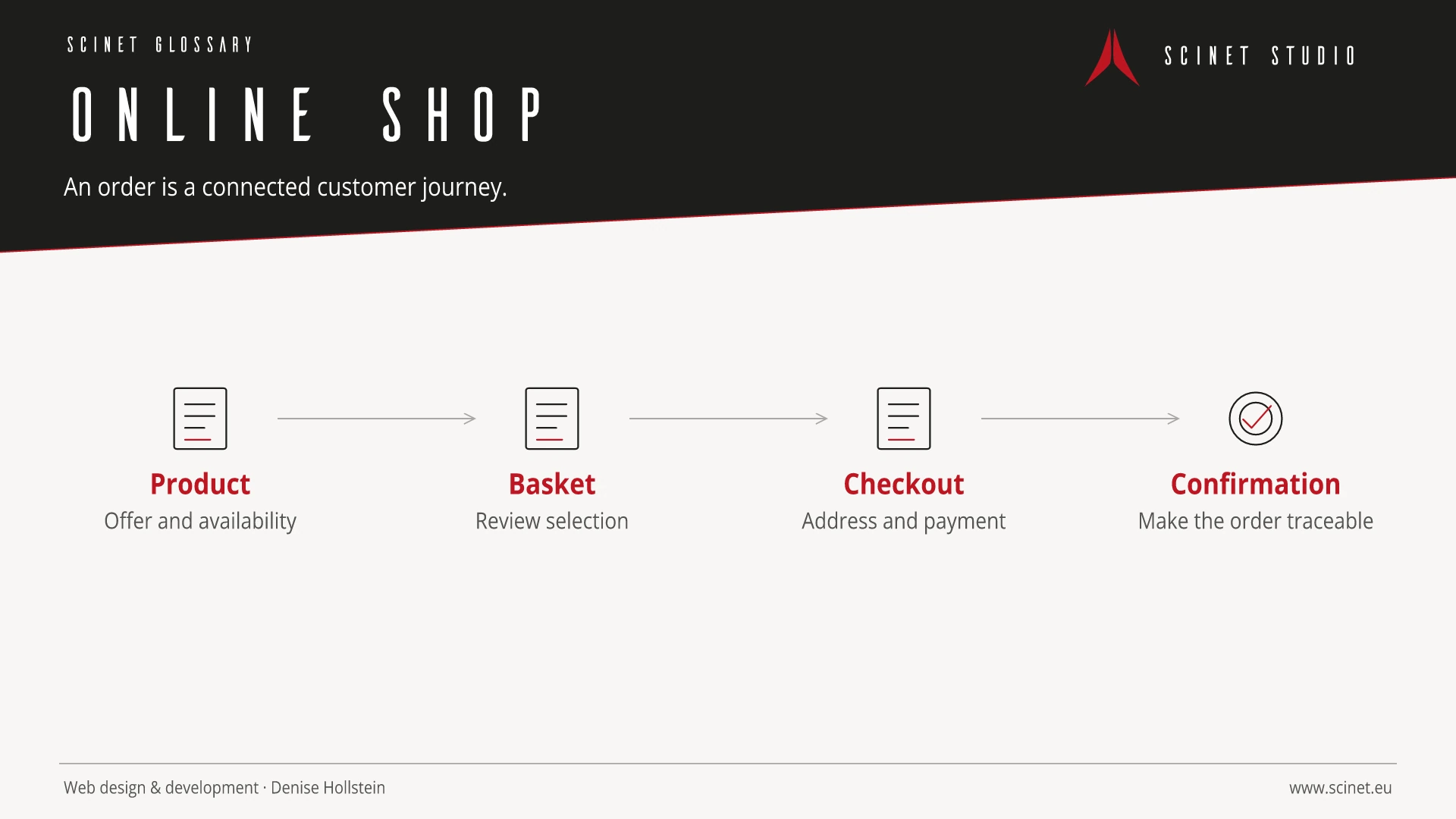
An online shop connects catalogue, search, basket, checkout, and post-purchase processes. Edge cases such as unavailable variants, vouchers, guest orders, and refunds belong in early testing and the data model.
A commerce system must cover more than product pages and a basket. Prices, taxes, inventory, shipping, payments, returns, roles, and integrations form one business process. Selection should therefore be tested with real products and edge cases. Updates, monitoring, and support matter as much as sales features because failures directly affect revenue and trust.
At a glance
Online Shop: relevance to SEO, paid search, and GEO
E-commerce visibility depends on crawlable categories, clear product variants, helpful information, and correct structured data. Paid campaigns also require reliable feeds, prices, and conversion values. Optimisation should not stop at order rate: margin, cancellations, returns, and customer value determine whether organic traffic or advertising spend is genuinely profitable.
For search and answer systems, coverage of Online Shop should distinguish its definition, scope, and evaluation criteria. The editorial reference is “E-commerce Directive” by European Commission, making central claims traceable for readers and machine-based systems.
Sources and further reading
- Official source E-commerce Directive European Commission · Checked
