Web design · Development · SEO
NLP
Natural language processing (NLP) explained
Editorially reviewed ·
Clear definition
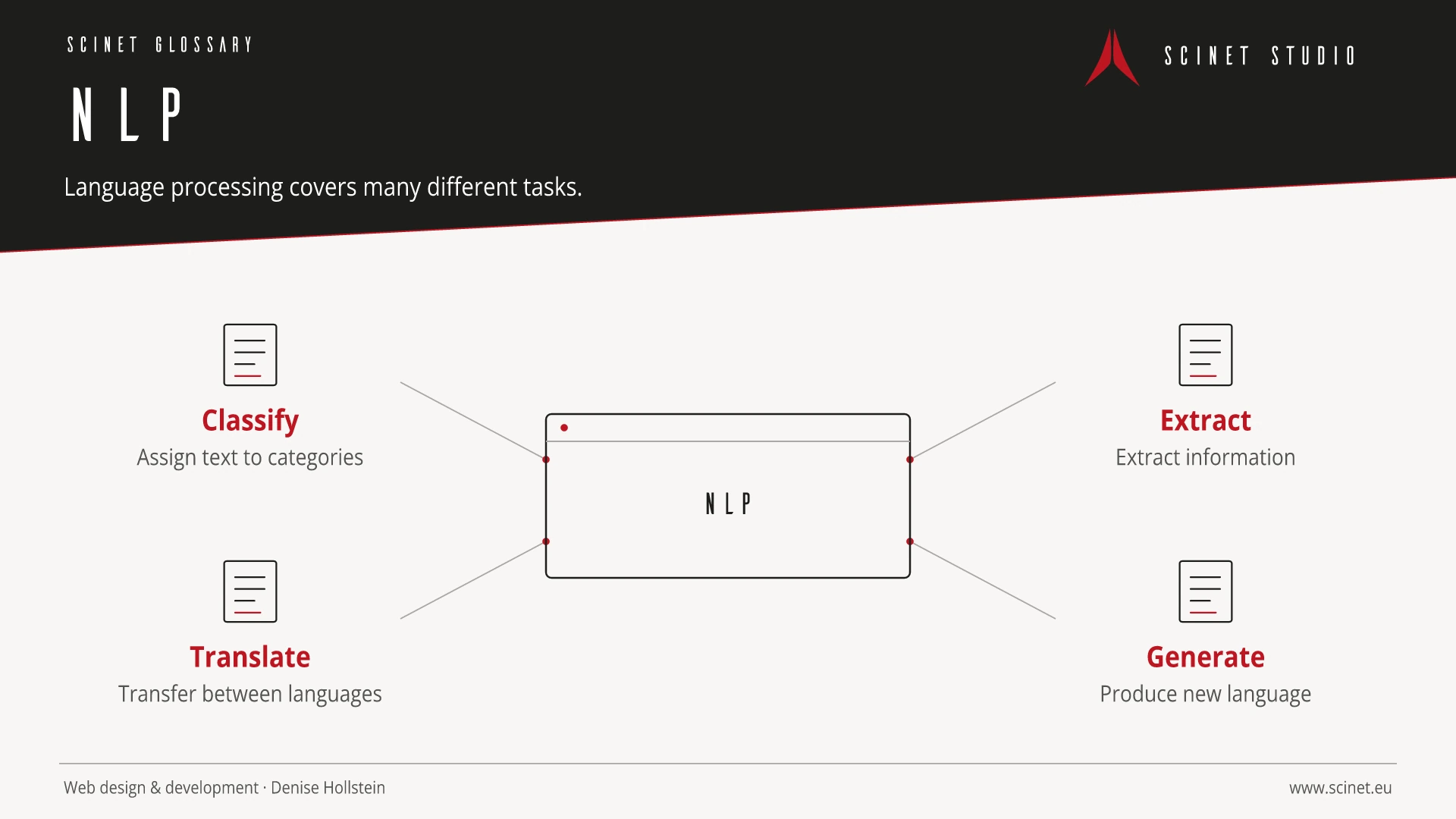
Natural language processing (NLP) is a field of computer science and artificial intelligence that develops methods for analysing, transforming, or generating spoken and written human language. Common tasks include search, classification, information extraction, translation, summarisation, speech recognition, and dialogue systems.
NLP is not synonymous with generative AI or LLMs. Rule-based techniques, statistical models, smaller specialised models, and large language models may be used or combined according to the task. Ambiguity, context, specialist language, dialects, and uneven training data limit reliability. Evaluation must therefore reflect real audiences, languages, failure types, and consequences.
NLP in practice
NLP includes rule-based, statistical, and neural methods for language. The suitable approach depends on task, available language data, error tolerance, and required explainability.
AI methods model statistical patterns from data. Quality depends on task, data, model, context, and evaluation—not one model-size number or a convincing demonstration. A defensible deployment defines expected outputs, known failure modes, test cases, human approvals, and treatment of confidential information. Cost and latency should also be measured under realistic load.
At a glance
NLP: relevance to SEO, paid search, and GEO
Search systems and content workflows increasingly use machine learning, yet discoverability still depends on accessible, unambiguous, useful information. AI can assist research and preparation but does not replace source verification or clear information architecture. For SEO and paid search, the question is whether published content answers a real need more effectively and leads to a reliable next step.
For search and answer systems, coverage of NLP should distinguish its definition, scope, and evaluation criteria. The editorial reference is “Speech and Language Processing” by Stanford University, making central claims traceable for readers and machine-based systems.
Sources and further reading
- Research Speech and Language Processing Stanford University · Checked
