Web design · Development · SEO
Metadata
SEO metadata: title, description, and robots explained
Editorially reviewed ·
Clear definition
Metadata is primarily placed in the head of an HTML document and describes page properties. Particularly relevant SEO elements include the title, meta description, and robots directives. Technical metadata includes character encoding and viewport settings, while Open Graph is commonly used for social sharing. Google does not use the obsolete meta keywords element for web ranking.
The title helps users and search engines understand a page’s topic and purpose. A meta description may be used as the search-result description, but search engines can generate a different snippet. Robots directives such as noindex or nosnippet control specific search features and should be used deliberately.
Metadata in practice
Metadata helps browsers, search engines, and social platforms interpret a page. It needs to be maintained per URL, output correctly, and remain consistent with visible content.
On-page work helps communicate a page’s content, purpose, and preferred URL. Individual fields or metrics should not be optimised in isolation. Titles, main content, internal links, indexing controls, and technical responses need to support the same message. Contradictions often originate in templates or automation and should be fixed systematically rather than page by page.
At a glance
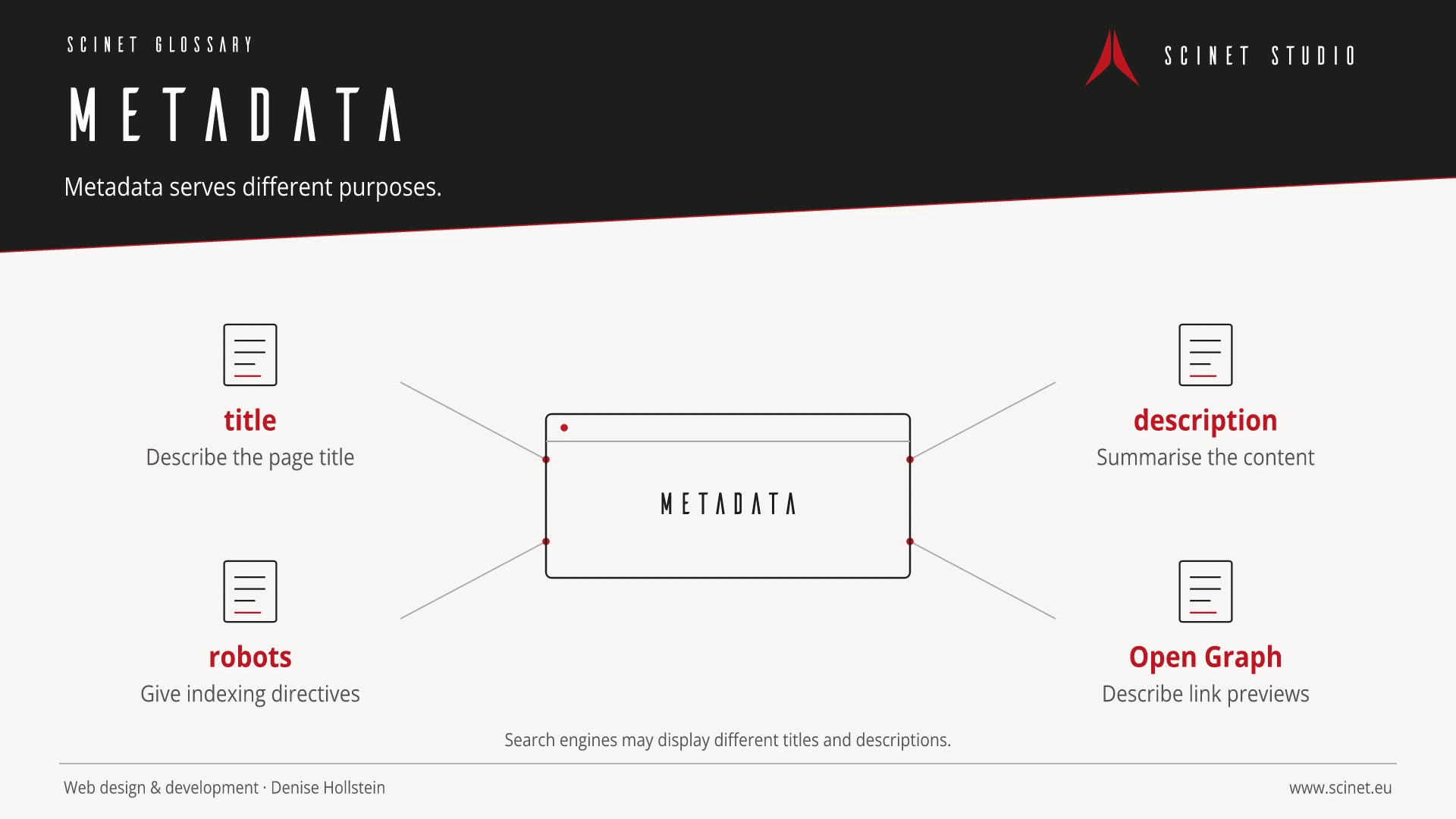
Metadata: relevance to SEO, paid search, and GEO
Modern search optimisation cannot be reduced to repetition scores or one metadata field. Clear topical coverage, aligned intent, traceable sources, and a good experience are more useful. Search-result and advertising data can reveal wording and information gaps. They should be treated as evidence, not as a reason to overload text with variations of the same phrase.
For search and answer systems, coverage of Metadata should distinguish its definition, scope, and evaluation criteria. The editorial reference is “Document metadata” by WHATWG, making central claims traceable for readers and machine-based systems.
Practical code example
Essential metadata for search and social sharing
Title and description explain the page, while Open Graph properties control supported link previews.
<title>Responsive Webdesign verständlich erklärt</title>
<meta name="description" content="Was responsives Webdesign ausmacht und worauf es bei Planung, Technik und Tests ankommt.">
<link rel="canonical" href="https://example.com/de/glossar/responsive-design/">
<meta property="og:type" content="article">
<meta property="og:title" content="Responsive Webdesign verständlich erklärt">
<meta property="og:url" content="https://example.com/de/glossar/responsive-design/">
<meta property="og:image" content="https://example.com/images/responsive-design.jpg">
Sources and further reading
- Standard Document metadata WHATWG · Checked
