Web design · Development · SEO
Material Design
Material Design explained: Google’s interface design system
Editorially reviewed ·
Clear definition
Material Design is a design system for digital interfaces developed by Google. It includes design principles, components, states, motion, typography, colour, and tools for different platforms. The metaphor of layered surfaces shaped early versions, while newer iterations offer greater customisation through colour, shape, and design tokens.
Material Design is more than a visual trend and is not identical to a single component library. Teams can adopt all or part of the system and adapt it to their brand. Unmodified default components may nevertheless create a generic appearance. Platform context, accessibility, implementation effort, and long-term maintenance should guide adoption.
Material Design in practice
Material Design provides an extensive system of components and motion principles. Adoption should consider brand expression, platform context, and which components are genuinely needed.
Good design connects brand character with a clear purpose. Reusable rules for typography, colour, spacing, imagery, and components create consistency and make future extensions faster. Concepts should be tested with realistic text lengths, different screen sizes, and real interactions. One impressive screen is not enough if the system breaks when new content is added.
At a glance
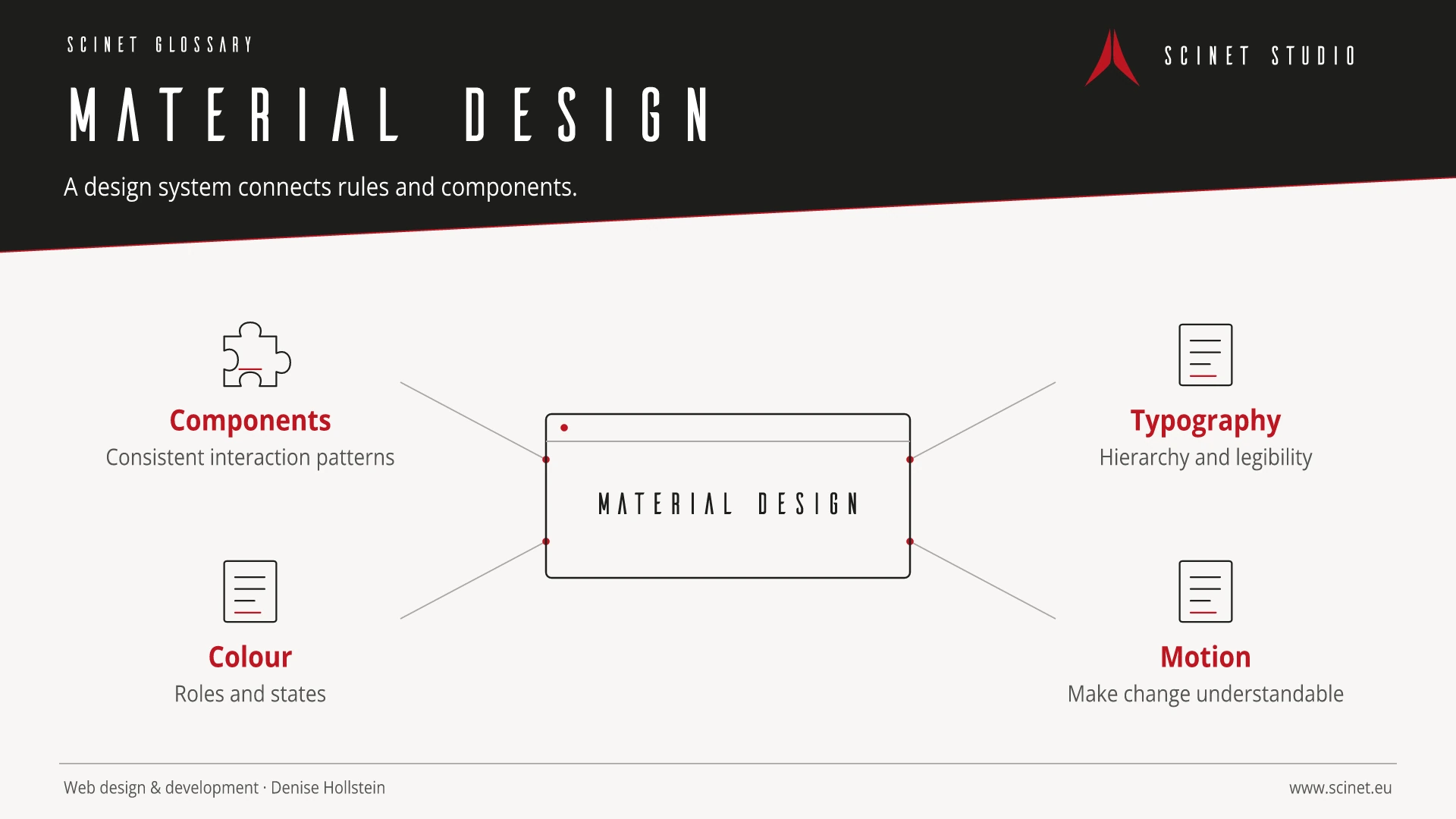
Material Design: relevance to SEO, paid search, and GEO
Design influences whether visitors recognise relevance quickly, trust a message, and find the next step. For SEO and paid search, design is therefore part of the destination experience rather than decoration. Clear hierarchy, readable text, and unambiguous actions can support conversion. A/B tests are useful when they examine a real hypothesis rather than merely comparing colours.
For search and answer systems, coverage of Material Design should distinguish its definition, scope, and evaluation criteria. The editorial reference is “Material Design 3” by Google, making central claims traceable for readers and machine-based systems.
Sources and further reading
- Documentation Material Design 3 Google · Checked
