Web design · Development · SEO
E-E-A-T
E-E-A-T explained: experience, expertise, and trust
Editorially reviewed ·
Clear definition
E-E-A-T stands for Experience, Expertise, Authoritativeness, and Trustworthiness. The concept comes from Google’s Search Quality Rater Guidelines. Quality raters use these guidelines to assess search-system performance; they do not directly change the rankings of individual pages.
E-E-A-T is not one measurable ranking factor. Google instead uses various signals intended to identify aspects of helpful and trustworthy content, with trust at the centre. Depending on the topic, first-hand experience or formal expertise may matter in different ways. YMYL content that can affect health, financial stability, or safety is held to particularly high standards of reliability, transparency, and sourcing.
E-E-A-T in practice
E-E-A-T stands for experience, expertise, authoritativeness, and trustworthiness. It is a quality concept from Google guidance, not one measurable ranking factor or a schema type.
AI-assisted search interfaces select, summarise, and cite information through their own processes. No technical marker can guarantee a mention. Clearly named topics, traceable authorship, current facts, accessible pages, and consistent information across reliable sources are useful foundations. Measurement needs to distinguish classic results, AI outputs, and actual website traffic.
At a glance
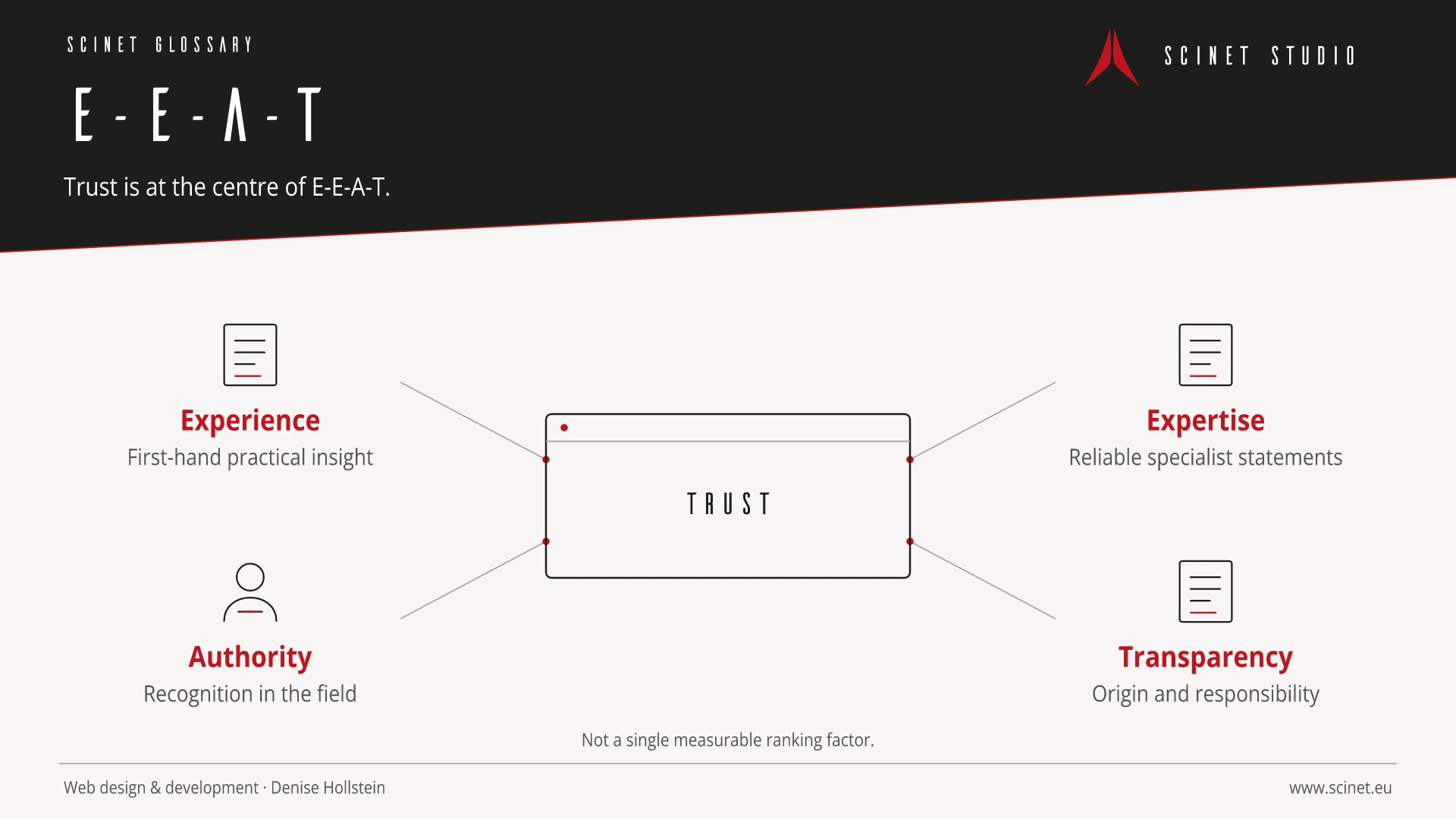
E-E-A-T: relevance to SEO, paid search, and GEO
New search presentations change click paths but not the need for trustworthy sources. Technical SEO, clear entities, internal linking, and helpful content remain foundational. Paid-search data can reveal demand and language, but paid placement does not guarantee an organic mention in an AI answer. Success should therefore be evaluated through several signals rather than a supposed AI ranking score.
For search and answer systems, coverage of E-E-A-T should distinguish its definition, scope, and evaluation criteria. The editorial reference is “Search Quality Rater Guidelines” by Google, making central claims traceable for readers and machine-based systems.
Sources and further reading
- Official source Search Quality Rater Guidelines Google · Checked
