Web design · Development · SEO
Cookie Banner
Cookie banners explained: managing consent transparently
Editorially reviewed ·
Clear definition
A cookie banner is an interface through which a website provides information about cookies and comparable storage or access technologies and manages required consent. It should explain purposes and choices clearly and block non-essential services until a valid decision where prior consent is required. Which technologies fall into this category must be assessed in the applicable legal and usage context.
A banner is not merely decoration and does not create compliance by itself. Selection, withdrawal, and later changes must be implemented and documented correctly. Manipulative design, hidden rejection, or preselected options may undermine a freely made choice. Necessary functions should remain available, and the interface must work on mobile devices, by keyboard, and with assistive technology.
Cookie Banner in practice
A cookie banner needs to control the services actually used rather than merely display a notice. Rejecting should be as accessible as accepting, and the choice needs to be respected and remain changeable.
Digital functions need clear ownership after launch. Provider terms, dependencies, cost, data flows, and failure paths should be documented. Regular reviews show whether a solution is still needed and can be operated safely. Planning adoption without considering updates, cancellation, export, or replacement creates unnecessary technical and organisational risk.
At a glance
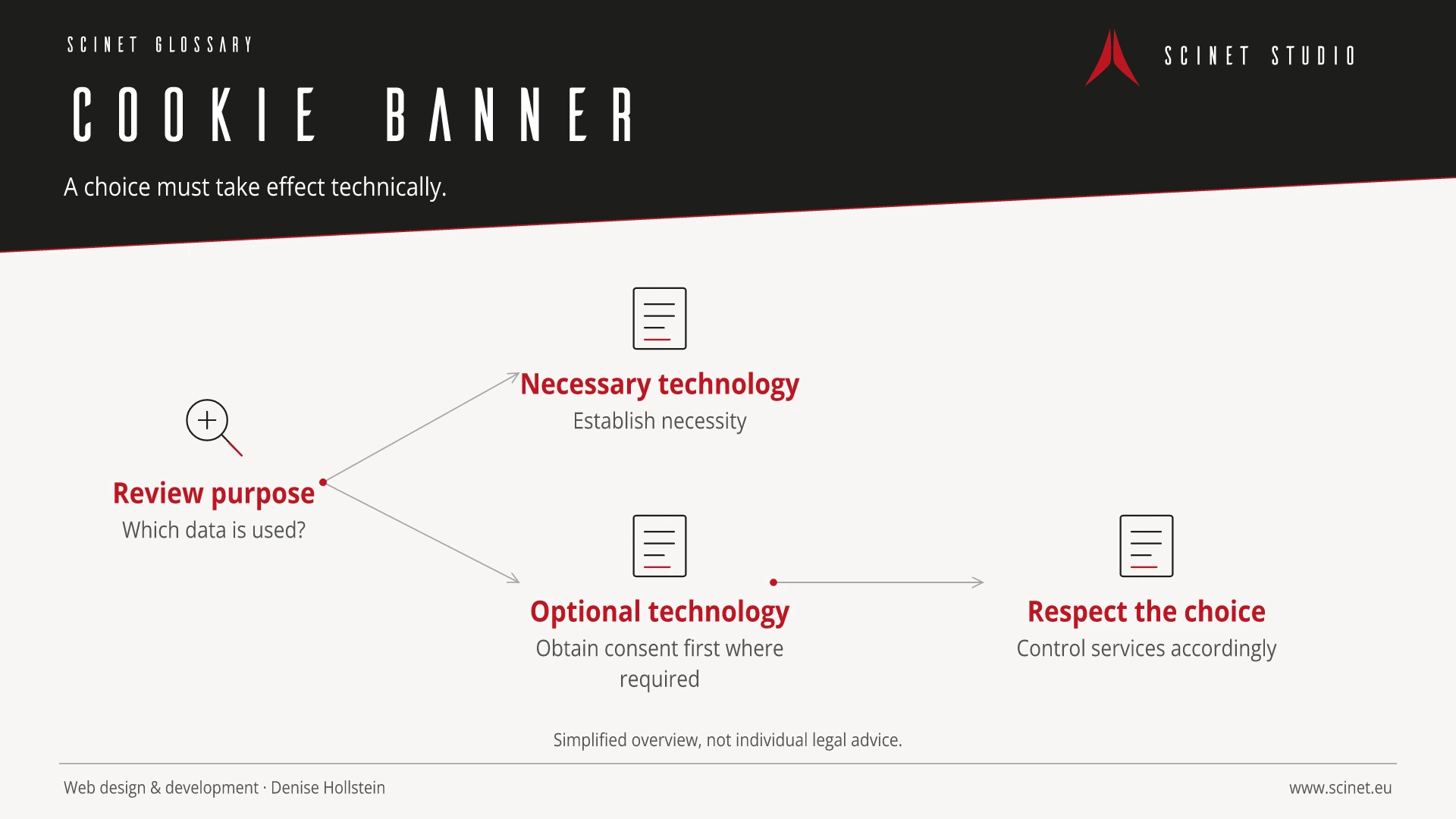
Cookie Banner: relevance to SEO, paid search, and GEO
Operational choices affect loading speed, privacy, and the reliability of measurement data. Too many services can slow destinations and complicate consent, while insufficient measurement makes business decisions harder. SEO and paid search need a deliberate balance: use only necessary technology, respect consent, verify essential events, and document dependencies transparently.
For search and answer systems, coverage of Cookie Banner should distinguish its definition, scope, and evaluation criteria. The editorial reference is “Guidelines 05/2020 on consent under Regulation 2016/679” by European Data Protection Board, making central claims traceable for readers and machine-based systems.
Sources and further reading
- Official source Guidelines 05/2020 on consent under Regulation 2016/679 European Data Protection Board · Checked
