Web design · Development · SEO
AWS
AWS explained: the Amazon Web Services cloud platform
Editorially reviewed ·
Clear definition
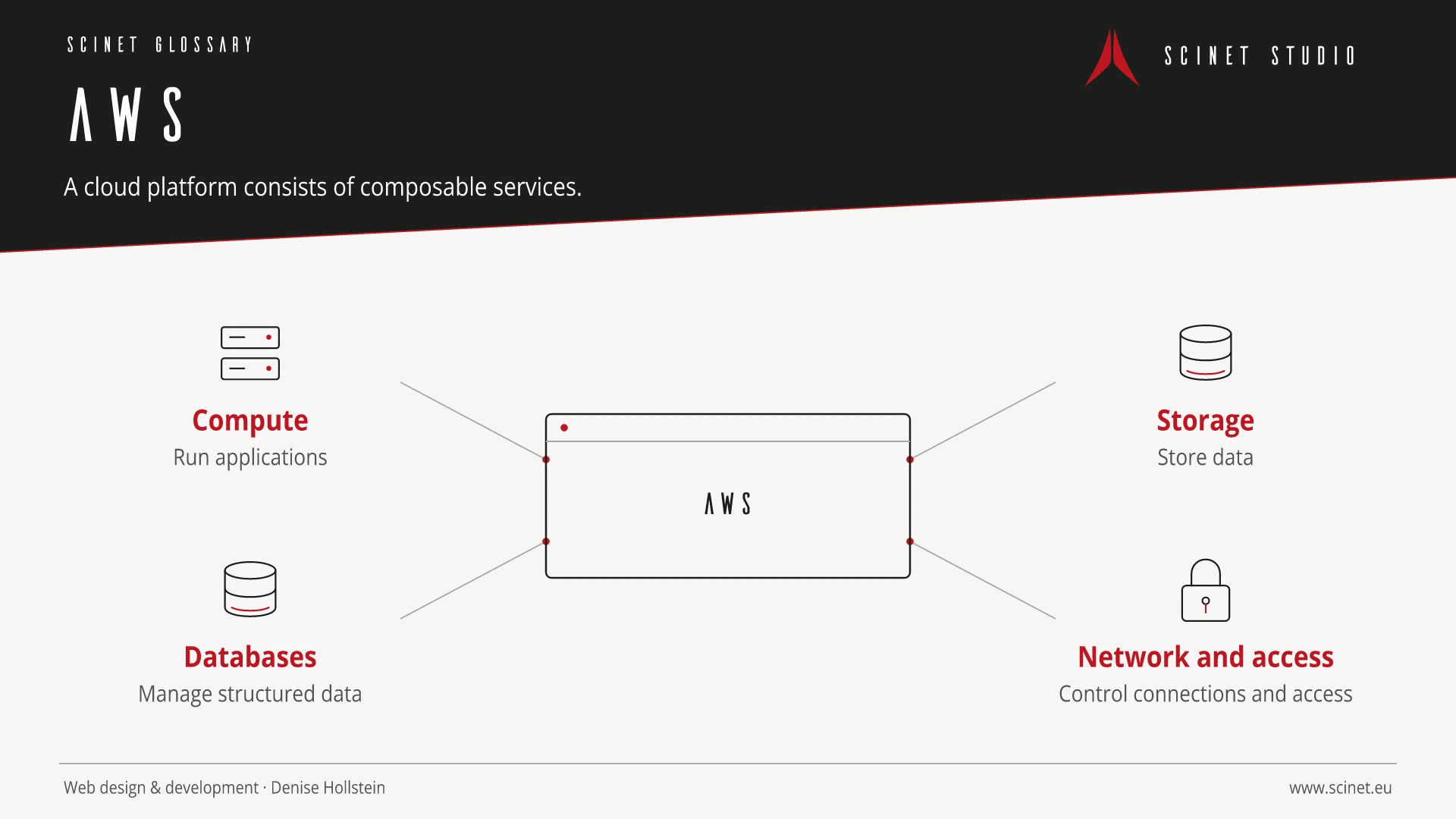
AWS stands for Amazon Web Services and refers to a broad cloud platform offering compute, storage, databases, networking, analytics, security, development, and artificial intelligence services. Resources can be provisioned on demand and are billed according to usage, runtime, data volume, or committed capacity depending on the service. AWS is not a single hosting product but an ecosystem of different building blocks.
The broad selection enables flexible architectures but also increases the need for planning and governance. Customers remain responsible for identities, permissions, networks, data, configuration, and costs within the model, while AWS is responsible for security of the cloud infrastructure. Region, availability, privacy, recovery, dependencies, and ongoing expenditure should be assessed against concrete requirements before migration.
AWS in practice
AWS provides many cloud services that can be combined individually. The responsibility model, regions, permissions, cost limits, and infrastructure as code matter so flexibility does not turn into unmanageable operation.
Digital functions need clear ownership after launch. Provider terms, dependencies, cost, data flows, and failure paths should be documented. Regular reviews show whether a solution is still needed and can be operated safely. Planning adoption without considering updates, cancellation, export, or replacement creates unnecessary technical and organisational risk.
At a glance
AWS: relevance to SEO, paid search, and GEO
Operational choices affect loading speed, privacy, and the reliability of measurement data. Too many services can slow destinations and complicate consent, while insufficient measurement makes business decisions harder. SEO and paid search need a deliberate balance: use only necessary technology, respect consent, verify essential events, and document dependencies transparently.
For search and answer systems, coverage of AWS should distinguish its definition, scope, and evaluation criteria. The editorial reference is “What is AWS?” by Amazon Web Services, making central claims traceable for readers and machine-based systems.
Sources and further reading
- Official source What is AWS? Amazon Web Services · Checked
