Introduction
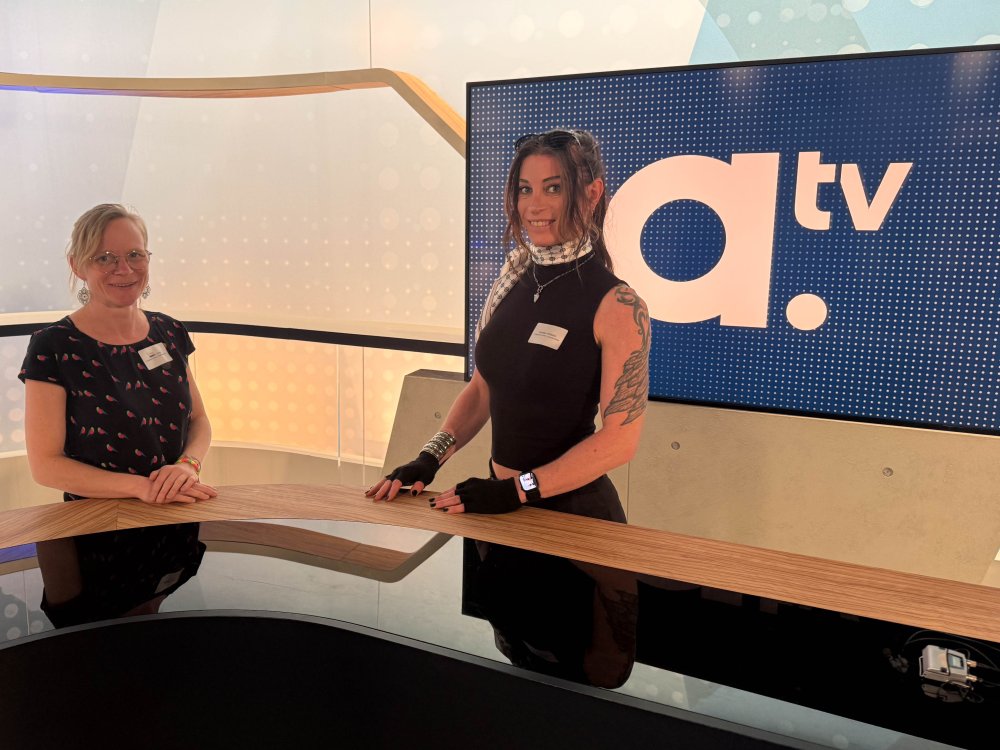
I attended the a.tv Business Forum 2026 in Augsburg. The central theme was “The Future of Truth—Between AI Creativity and a Return to Authenticity.”
For me, it wasn’t a tech update. It was a market update: many talk about AI, few apply it properly. Right now, the gap between “tool users” and “process thinkers” is widening fast.
What I observed in the market
The mood was split between excitement, uncertainty, and a strong desire to stay “real.” That’s understandable. But it often distracts from the core point: AI is not a goal in itself. It’s a tool—and it only delivers when goals, workflows, and quality standards are defined.
The real problem: AI is used the wrong way
In day-to-day work I keep seeing the same patterns. Many companies either don’t use AI at all, or they use it in a way that produces volume without identity.
Typical misuses:
- Generating content blindly, without strategy or audience fit
- Introducing tools without understanding processes and responsibilities
- Using AI as a replacement for thinking—instead of an amplifier
The outcome is predictable: generic output, weak positioning, and no real value for customers or teams.
Who needs to act now
This is not just a marketing topic. Leadership, marketing/sales, operations, and IT are all involved. AI changes workflows. Without ownership, AI becomes a playground. With ownership, AI becomes a productivity engine.
From when: it’s no longer “if”
From my perspective, the timing is already here. AI is no longer “slow progress”—it simply happens. While companies debate, models and capabilities keep improving in the background.
My reality check:
During the event, my MacBook Pro installed an AI update automatically (Claude Code). No workshop, no debate—just normal day-to-day evolution.
The practical consequence: companies should embed AI now into selected workflows—with rules and measurable outcomes.
Exceptions: where I limit AI on purpose
There are areas where I don’t “let AI run” and I apply strict control—or skip it:
- Legally sensitive content without a clear approval flow
- High-reputation-risk communication (e.g., crises, sensitive HR topics)
- Core positioning and key arguments: my thinking must lead, not the model
AI can support, but accountability stays with humans—especially for tone, stance, and final decisions.
Why cost-benefit is the deciding factor
AI pays off only when it’s used efficiently and purposefully. Not “more AI,” but “better placement.”
Where AI usually creates real ROI:
- Automating repetitive tasks (research clustering, summaries, templates)
- Supporting content structure, variants, and ideation
- Speed gains without losing quality control
The biggest misconception remains: more AI does not automatically mean better results. Without guardrails, you just scale mistakes.
Action steps: how I apply AI in a structured way
- 1) Define the goal: what improves (time, quality, consistency, conversion, support)?
- 2) Pick one workflow: a clearly bounded process, not “everything at once.”
- 3) Assign roles: who creates, who reviews, who approves?
- 4) Set quality standards: what’s acceptable—and what’s off-limits?
- 5) Measure: before/after comparison (time spent, error rate, output quality, business metrics).
Consequences: what happens with unstructured AI use
If you experiment without a plan, you pay twice: first through weak output, then through rework and lost trust. Typical consequences:
- Brand dilution due to inconsistent tone and claims
- Teams lose time through rework instead of gaining time
- Tool silos emerge because everyone uses “their own stack”
- Competitors pull ahead by scaling processes faster

My conclusion
The question is no longer whether you use AI, but how well you understand and apply it. Companies that hesitate or test randomly will struggle in the coming years. Those who think clearly, understand processes, and embed AI with intent will stand out. That’s my approach with scinet: no hype—measurable value.
FAQ
What was the central topic of the a.tv Business Forum 2026?
“The Future of Truth”: how AI creativity and the push for authenticity shape the market at the same time.
Why is AI often used the wrong way in companies?
Because tools are used without strategy, process ownership, and quality standards—leading to volume instead of positioning.
From when should companies integrate AI as a standard?
Now: in selected workflows with clear roles, approvals, and measurable checkpoints—treated as a work standard, not a side project.
What are the consequences of unstructured AI use?
Generic output, more rework, inconsistent brand communication, and a competitive disadvantage versus structured adopters.